One module, many clients
Package the ops system, the CRM setup, or the automation you keep rebuilding. Install it into any client's copy in minutes rather than repeating the build.
You've built the same client system four times and billed hours each time. On KickSide you build it once as a module, install it into each client's own copy, and put your name on it.
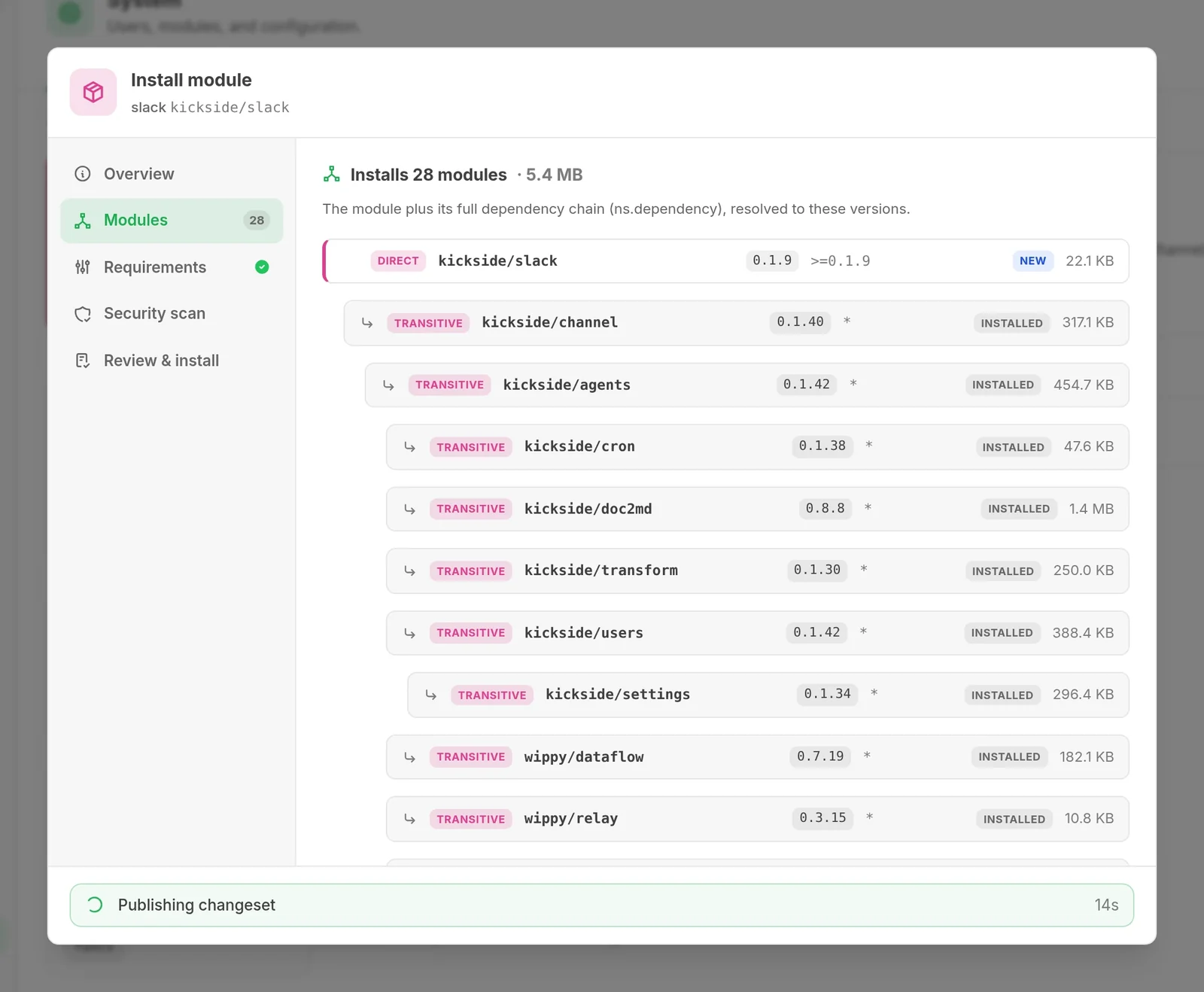
The knowledge was always yours. Now the thing you built with it is too.
Package the ops system, the CRM setup, or the automation you keep rebuilding. Install it into any client's copy in minutes rather than repeating the build.
Publish to the Hub under your own namespace, publicly or privately. You keep ownership and copyright. Clients see who built it.
Fix something once and every client can update from one screen. The fourth client stops costing four times the work.
Run a copy on a client's behalf, as long as they own and control it. That's services, and it's free at any scale. Cloud Team gives you hosting, sync and single sign-on to do it with.
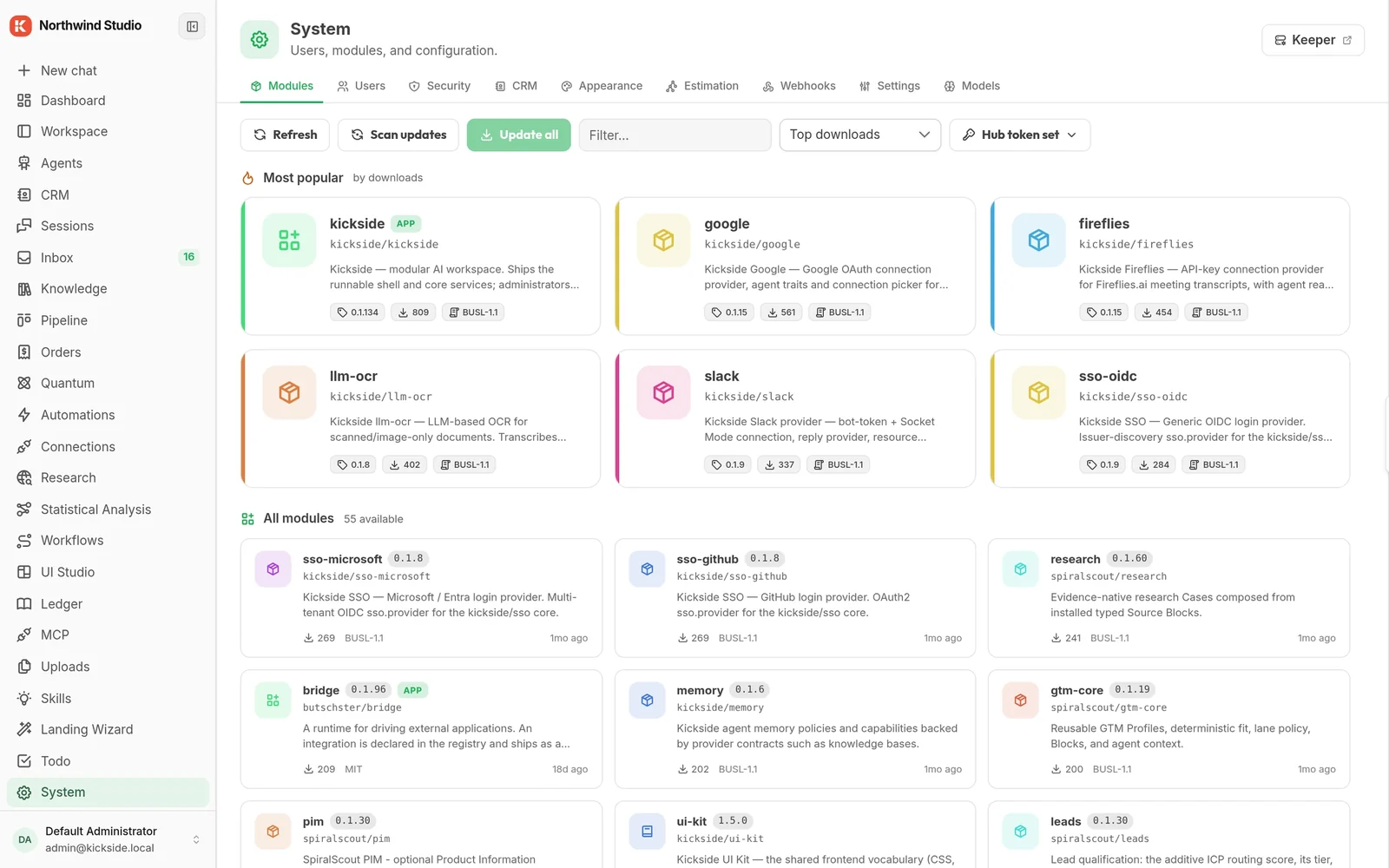
Each of these is a module on the same copy, using the same records underneath. A client sees them in the sidebar next to everything else they run.
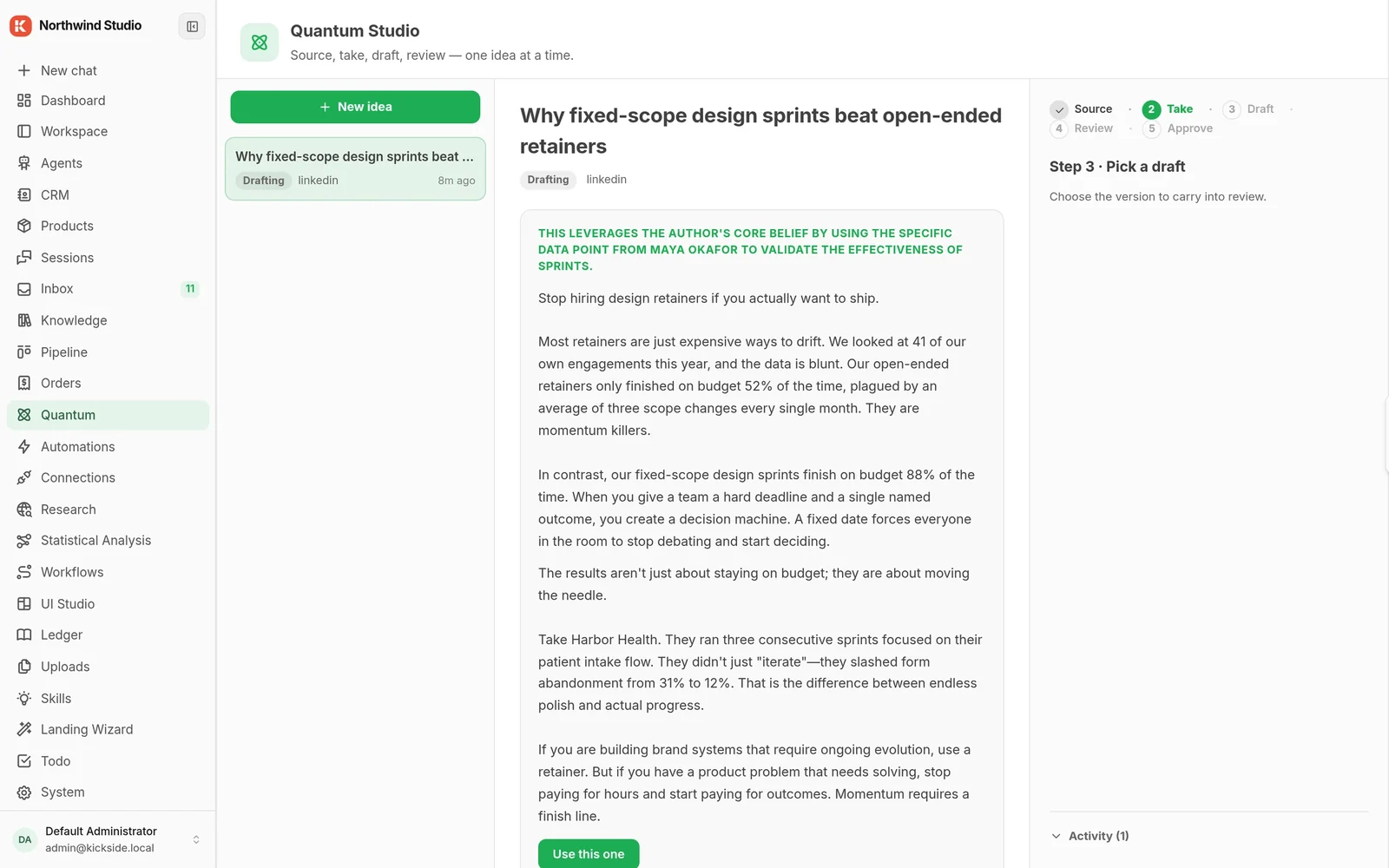
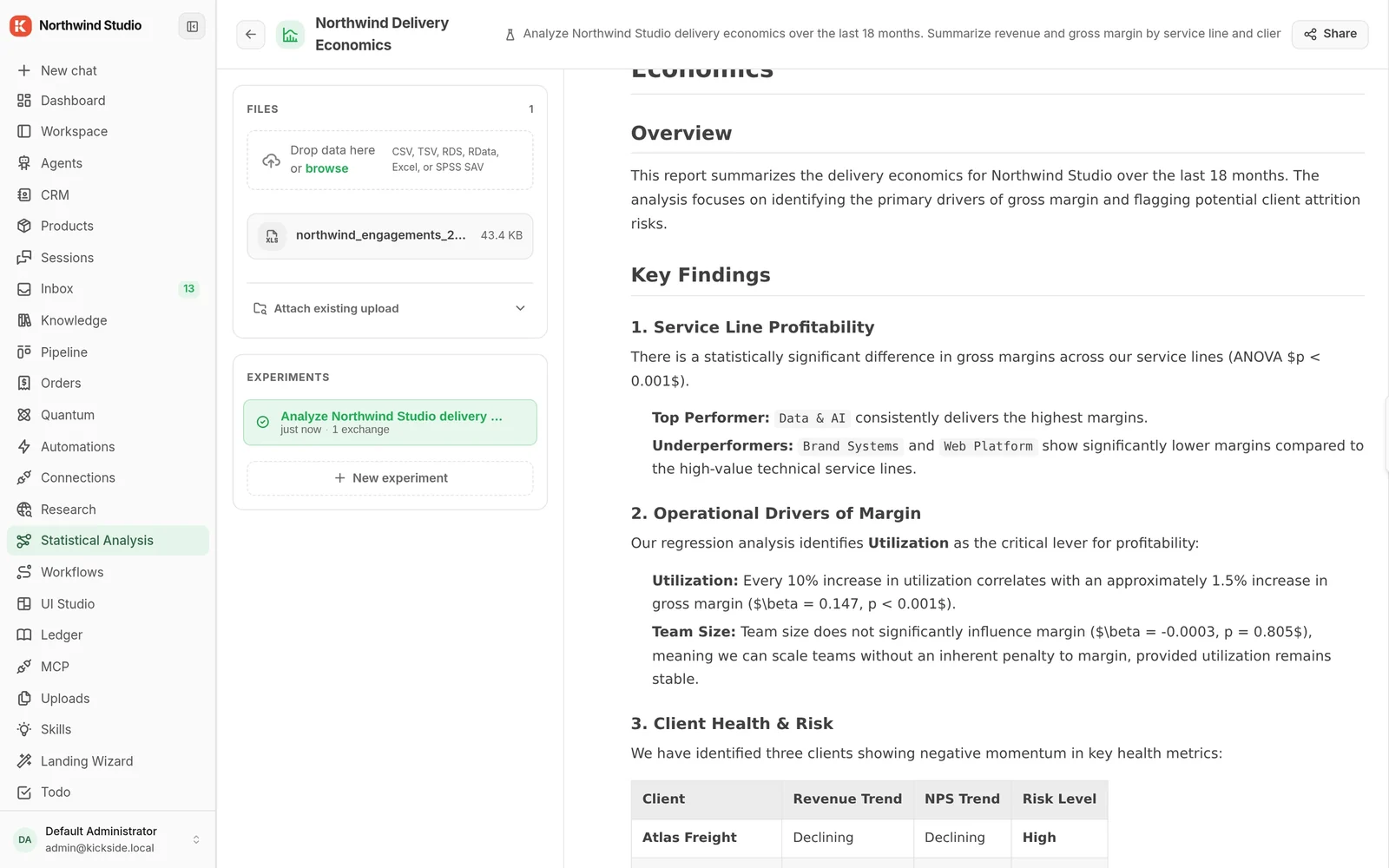
Nothing here requires you to become a software company or take on a product roadmap. It is the same delivery model you already run, with the rebuild taken out of it.
The first one is a build and it costs what a build costs. Every one after it is an install.
A normal project, billed the way you bill projects now. The difference is what you are left holding at the end: an installable module rather than a folder of bespoke work.
Minutes instead of weeks. You can price the second engagement on the value it delivers rather than the hours it takes, and the gap between those two numbers is yours.
Hosting, support, changes, and running the copy for clients who would rather not. Recurring revenue, on work you were doing anyway, and free under the licence.
Put the module on the Hub under your namespace. Public or private, free or paid, your terms. Every install carries your name into a company you have never met.
If they pay you for what you built, that's services. If they pay you for KickSide, that's resale.
We grant those as a matter of course to hosting and platform partners, including on a revenue share, and the conversation is short.
The whole licence in plain languageCommunity is free and unlimited, so the honest first step is to build one of your own repeat systems on it and see how long the second install takes. Then talk to us about the partner licence.
curl -fsSL https://get.wippy.ai | shwippy install kickside